Our Arklahoma Heritage: Lost to the memories of revisionist history, US Marshal D.P. Upham was cut from sterner cloth


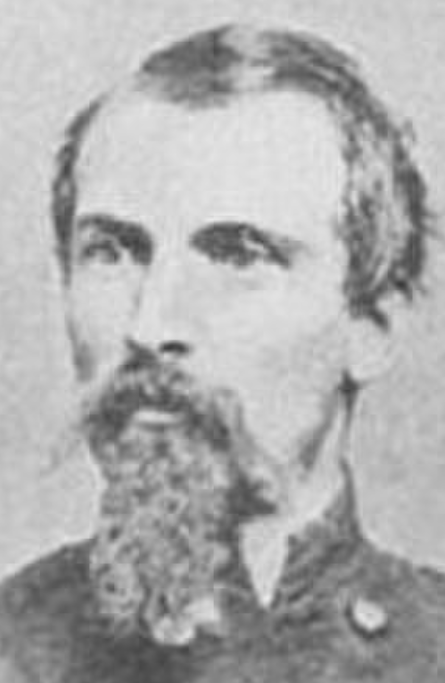
In the dense fog of postbellum Arkansas, where justice bled into vengeance and the boundaries between lawman and zealot blurred by candlelight, there emerged a figure cut from sterner cloth.
Daniel Phillips Upham was not the kind of man time forgets--he was a storm front in human form, a fusion of Yankee ambition and Southern consequence whose hands carried both cotton and gunpowder.
Yet in the annals of the commonly recognized history of the state, his name is not listed as one of the pillars of the frontier, an affront to a man who was forged of streel and betrayed by the fire of countless men he once considered friends and allies.
Born in the wintry folds of Dudley, Massachusetts, Upham’s early life was marked by losS--his mother died shortly after his birth, casting a quiet shadow over a childhood that would know no such softness in later years.

He married Elizabeth Kingsbury Nash in 1860, and together they forged a union that withstood betrayal, bloodshed, and the corrosive politics of a land tearing itself apart. A decade after the Civil War, their adopted daughter Isabel would arrive, bringing peace into a household never granted it by the world beyond.
Upham’s entry into Arkansas in 1865 coincided with a region starved for order and bloated with resentment. A failed New York entrepreneur turned plantation owner, he purchased saloons, steamboats, and land, assembling a life of frontier prosperity.
But peace was never his fortune.. The rise of the Ku Klux Klan compelled him to act---not as a passive legislator but as a militant guardian of Reconstruction. Appointed commander of the Woodruff County militia, he took up arms not with restraint but with conviction.

His troops--often composed of freedmen--pushed back against white insurgents with ferocity, storming towns, capturing suspected Klansmen, and exacting justice in its rawest form.
Critics condemned him. He was tried for murder in 1875 for the deaths of Klan sympathizers--but was acquitted. To Upham, legality was not merely a code; it was the final thread holding civil society together, and sometimes that thread required a bullet.
It was this hardened vision that brought him to Fort Smith in 1876, appointed U.S. Marshal under Judge Isaac C. Parker, whose courtroom became an altar of law in the untamed West. Parker, known for his own uncompromising stance on justice, accepted Upham despite his violent past.
For four years, they worked in tandem--Parker from the bench, Upham in the field--enforcing federal law across Indian Territory and beyond.

Yet no man of conviction survives politics unscathed. In 1880, the same networks that had championed Upham’s rise collapsed beneath him. Senator Stephen Dorsey--once an all--led the charge to remove him. Powell Clayton, the former governor who had armed Upham against the Klan, stood down in silence.
Parker, too, remained quiet. Whether out of caution or resignation, the judge did not publicly defend his Marshal. Upham’s reappointment was blocked not by verdict or scandal but by apathy among those who once whispered their approval in his ear.
Sickened by tuberculosis, Upham returned to his birthplace and died in 1882. He was buried not where he began, but where he fought--at Oakland Cemetery in Little Rock.
. His wife followed two years later, and Isabel lived quietly until her death in 1926.

The name of D.P. Upham faded from common tongue, but never entirely vanished. It lingers on markers and in archives, resurfacing in documentaries and among historians who dare to tell stories of righteous violence.
Upham was no saint. He was a man built for the moment--a moment when law required a soldier’s heart and a politician’s composure. He believed that justice, to survive, must be unafraid to fight for breath
. And in the warped, half-lit corridors of Arkansas's redemption, he fought harder than most.


