Our Arklahoma Heritage: Georgia-born Civil War veteran built a home and family in the Pope County wilderness in 1885



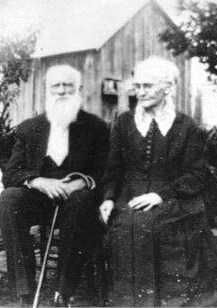
Starling Gilmore Harris, born on March 16, 1842, in the red-clay heartland of Georgia, emerged from humble beginnings to become a cornerstone of Pope County in the late 1800's.
Raised on a family farm alongside siblings Edward Thomas (1831–1900) and Melissa Irene (1836–1871, later Rainey), Starling grew up with modest schooling but a strong habit of reading, shaping his practical knowledge.
By 1860, the Harrises lived in DeKalb County, working the land as tensions over secession loomed.
In June 1862, at age 20, Starling enlisted in Company A, the "DeKalb 'Murphy' Guards," of the 38th Regiment Georgia Volunteer Infantry, a unit of over 1,800 men from DeKalb, Muscogee, and other counties, organized in 1861 under Colonel Augustus Wright.
Part of Lawton’s Brigade in Jackson’s Second Corps, Army of Northern Virginia, the 38th saw heavy action. At Antietam (September 1862), they fought in Miller’s Cornfield, losing over 500 men in a day of brutal combat.
Starling, a private, survived the slaughter. At Fredericksburg (December 1862), the regiment repelled a Union assault, and Starling earned a promotion to 1st Corporal.

The 38th’s trials continued at Gettysburg (July 1863), where, under Gordon’s Brigade, they broke the Union XI Corps’ flank, capturing prisoners but suffering 40% losses. They fought at Chickamauga (September 1863), Malvern Hill, and Cold Harbor.
In May 1864, at the Wilderness, Starling was wounded, ending his frontline service. Transferred to Georgia state troops as a second lieutenant in Dyer’s Battalion, he served until the war’s end in 1865.
The 38th endured Petersburg and the Crater, surrendering with just 105 men at Appomattox.
Returning to DeKalb County, Starling worked as a miller for a year before moving to Blount County, Alabama, to farm, then to Birmingham for three years in the timber trade.
In 1867, he married Eliza Jane Bagwell, and they had eight children: Charles Vander (1868–1962), Lavonia Viola (1870–1930, married Riley Leavell), Etta L. (1873–1893), Oscar Gilmore (1876–1960), Gordon Pulaski (1878–1960), Sallie A., Albert J. (1881–1894), and John Cleveland (1885–1970), plus an infant who died in 1891.
In March 1875, Starling settled in Pope County on Colony Mountain, starting with 50 acres and expanding to 310, with 95 acres cultivated. He built a home, barns, and an orchard, and in 1885 added a grist-mill and cotton gin to serve the community.

Eliza’s death that same year was a heavy blow.
Plans for a mercantile store followed. In 1886, he married Martha F. Mason, daughter of James M. and Mary Tate of Johnson County.
A Baptist, Mason, and Democrat, Starling rooted himself in local life. His parents, Sarah (d. 1869) and John (d. 1888), were buried in Adams Cemetery, Johnson County, where his siblings Edward and Melissa also rested.
Starling died on December 29, 1930, at 88, and was buried in Adams Cemetery.
His life bridged the Civil War’s chaos and Arkansas’s frontier promise, reflecting a man who fought, rebuilt, and endured through decades of change.


