Our Arklahoma Heritage: From McCurtain County's first judge to an international pop artist icon



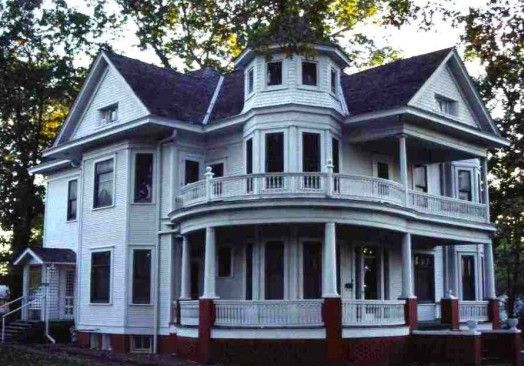
At the corner of SE Adams Street in Idabel stands a towering Queen Anne-style home with twin circular turrets and a wraparound porch that whispers of early 20th-century ambition.
This is the Barnes-Steverson House, a four-story marvel built between 1911 and 1912 for Thomas Jefferson Barnes, McCurtain County’s first county judge, and his wife, Myrtle Luttrell Barnes.
Born on May 16, 1874, in Sevier County, Arkansas, Thomas Jefferson Barnes was a pioneer in every sense of the word. He moved to Indian Territory in the late 1890s and quickly became a respected figure in the legal and civic life of the region.

With Oklahoma’s statehood in 1907, Barnes was elected the first county judge of McCurtain County, a role he held with distinction for four years.
During his tenure, Judge Barnes presided over 1,200 probate cases and 700 criminal and civil cases--a staggering caseload for a newly formed county. Remarkably, none of his decisions were ever reversed by higher courts. His reputation as a fair, unflappable jurist earned him admiration across southeastern Oklahoma.
In 1912, he ran for County Attorney, described by local press as a man of “bulldog tenacity” and “a terror to evil-doers.”
Beyond the bench, Barnes was a banker, newspaperman, and civic leader, deeply involved in shaping the early infrastructure of Idabel.
He passed away in 1950 at the age of 76 and is buried in Denison Cemetery in Idabel.

In 1911, Judge Barnes commissioned architect Jewell Hicks, who would later co-design the Oklahoma State Capitol, to create a home that reflected his stature. Builder R.D. Cheatham brought the vision to life using seasoned oak, ash, cypress, and pine.
The home boasted 14 rooms, a full basement, leaded glass windows, and one of the first indoor plumbing systems in the region.

The home’s grandeur was more than personal—it became a symbol of progress in McCurtain County. As one of the finest examples of Queen Anne architecture in southeastern Oklahoma, the Barnes residence stood out for its:
Dual circular towers framing the façade
Full-width porches on both levels
Finely crafted woodwork and decorative glasswork
Early adoption of modern amenities like indoor plumbing
Its architectural prominence, paired with its owner’s political legacy, led to its designation on the National Register of Historic Places in 1978, under the categories of Architecture and Politics/Government.

In 1973, the house passed into the hands of Harold Moncreau Stevenson Jr., a world-renowned painter and Idabel native. Born in 1929, Stevenson was a precocious talent who opened his first art studio in downtown Idabel at age 10.
He later studied at the University of Oklahoma before launching an international career that would place him among the titans of the Pop Art movement.
Stevenson was best known for his monumental figurative works, particularly “The New Adam”, an 8-by-39-foot reclining nude of actor Sal Mineo, now housed in the Guggenheim Museum.
Another iconic piece, “Eye of Lightning Billy,” was featured in the 1962 “New Realists” exhibition at the Sidney Janis Gallery alongside works by Andy Warhol, Roy Lichtenstein, and Claes Oldenburg.

A close friend and early supporter of Warhol, Stevenson also appeared in several of Warhol’s films and helped secure his first gallery show.
Despite his international acclaim, Stevenson never severed ties with Idabel. He once said, “I never left. I always had the same legal address at my family’s home, literally.”
When he acquired the Barnes House, Stevenson restored it with reverence, preserving its original woodwork and architectural flourishes while using it as a creative sanctuary.
He lived there until his death in 2018, and was laid to rest in his hometown at Denison Cemetery.

His grave, marked simply in the red Oklahoma soil, rests quietly among the pines--much like the artist himself, whose legacy was both bold and enigmatic. For a man once draping portraits from the Eiffel Tower and sharing canvases with Andy Warhol, the return to Idabel was not a retreat but a renaissance.
In death, as in life, Stevenson stands at the intersection of the global and the local: an artist of international renown who always called Idabel home.

Thanks to archival records, we now know that Judge Barnes isalso interred at Denison Cemetery in Idabel. His wife, Myrtle Luttrell Barnes, is buried alongside him. Their final resting place, like their home, remains a quiet monument to a life of public service and civic pride.
Locals say Judge Barnes was known for his “courtroom calm” and a smile that could disarm even the most irate litigant.
His wife Myrtle, once a beloved schoolteacher, made her mark through elaborate garden parties and the constant scent of fresh-cut flowers that greeted every visitor--a tradition artist Harold Stevenson reportedly continued with flair until his death.


