Our Arklahoma Heritage: Emmett McLemore played on an early NFL team coached by Jim Thorpe
- Dennis McCaslin

- Apr 1
- 3 min read


Emmett G. McLemore was born on September 12 1899 in the Lyons community of Adair County in Oklahoma Territory. The area consisted of scattered farms and Cherokee allotments tucked into the oak covered hills east of Stilwell.
His family carried Cherokee lineage rooted in the post Trail of Tears resettlement of the Nation. He grew up working the land attending local one room schools and developing the quickness that later earned him the nickname Red Fox among teammates and opponents.
The McLemore household emphasized education and community ties common among Cherokee families in the region. Emmett married Myrtle J. Peniska, and they raised their family in the same Lyons home place where he had been born. Their son Jack Emmett McLemore arrived on September 26, 1924.
Jack later described the Lyons home as the hub of family gatherings, especially during holidays. Other children included a daughter Pauline Joy known as Polly. The family remained anchored in Adair County through generations with roots extending back to the Cherokee Nation districts that became the county after statehood in 1907

As a young man, McLemore left the county for Haskell Institute in Lawrence Kansas. The federal boarding school trained Native students while fielding competitive athletic teams.
In 1919 he appeared in team photographs as a football player kneeling in the second row.
The experience sharpened his skills and connected him to a network of Indigenous athletes from across the country. He also spent time at Pittsburg State before returning to Oklahoma.
The team was based in LaRue, Ohio and consisted entirely of Native American players and was coached by Jim Thorpe.
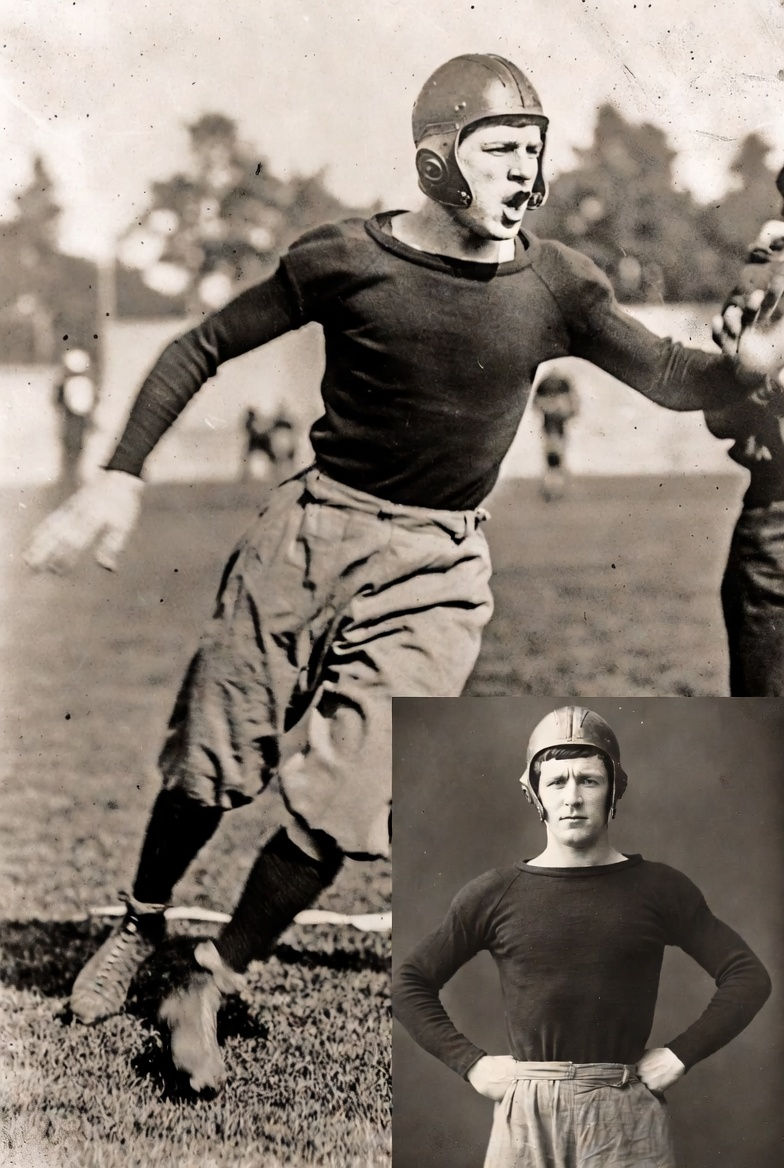
In 1923, at age twenty-four McLemore signed with the Oorang Indians of the National Football League.

McLemore played blocking back listed at 5'*" and 163 pounds. He appeared in nine games that season, completing one pass for a fifteen-yard touchdown to teammate Joe Arrowhead on December 2 and kicking a field goal following an interception by Joe Guyon.
The Indians finished with a modest record, but the roster represented one of the leagues most distinctive experiments in its early years. McLemore moved to the Kansas City Blues for the 1924 season adding to his total of thirteen professional games.
After his playing days ended, he enrolled at Northeastern State Teachers College in Tahlequah. The training prepared him for a career in education that spanned nearly four decades. He began as head football and basketball coach at Stilwell High School from 1928 to 1929.
In 1930, he took the same role at Bacone College in Muskogee, where he remained through 1938. From 1939 to 1946 he coached at Sequoyah Indian Training School in Cherokee County. Starting in 1947, he led athletics at Jones Academy.
Throughout these years, he taught classes and mentored students, many of them from Cherokee and other tribal backgrounds. The work kept him traveling across eastern Oklahoma, but he and Myrtle always returned to the family place in Lyons.
McLemore also served in the military. Records note his volunteer enlistment and status as a veteran, though specific details of his tour remain tied to family accounts rather than public rosters. After the war he resumed coaching and teaching while his son Jack followed a similar path.

Jack served in World War II finished high school at Union Grove, and then earned a degree from Northeastern State College. Jack taught at Cave Springs School near Bunch, spent a short time in New Mexico and retired from Stilwell Junior High.
The two generations of McLemore educators reinforced the value of schooling in their tight knit Adair County circle.
Emmett McLemore died on May 19 1973 at Stilwell Municipal Hospital. He was seventy-three.
Burial took place at Stilwell Cemetery where the family plot holds generations of relatives, including his wife Myrtle and son Jack, who passed in 2017.
The cemetery sits on a rise overlooking the county seat a short drive from the Lyons community that defined his life.
In later years, locals remembered him through the E. G. McLemore field house at Stilwell High School, a modest acknowledgment of his long service to area athletics.

His story traces a path from the rural Cherokee landscape of Adair County through the short-lived world of early professional football and into decades of coaching at schools that served Native students.
McLemore never sought national attention yet his record of play under Thorpe his consistent work in Oklahoma classrooms and his role as a father and community figure left a quiet imprint on the region.
The Red Fox nickname faded with time, but the steady routines of practice field and family home in Lyons remained the constants of a life lived entirely within the hills he knew from birth.


