Our Arklahoma Heritage: Decisive Strike at Hahn's Farm: The Civil War's final engagement in Scott County
- Dennis McCaslin

- Sep 23, 2025
- 3 min read


A little-known Civil War battle fought on fertile farmlands that saw 250 Union troops rout 500 Confederate troops, saw troops from Fort Smith prevail over a much larger Texas fighting force.
The Skirmish at Hahn Farm represented the end of organized Confederate resistance in the county and exemplified the decisive, small-unit warfare that characterized the conflict’s final phase in the Trans-Mississippi West.
By the summer of 1864, Federal forces had established a firm grip on Arkansas following the capture of Little Rock the previous year and the conclusion of the demanding Camden Expedition.

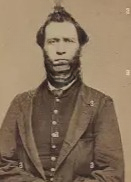
Brigadier General John M. Thayer
Confederate troops were largely scattered, though pockets of resistance remained active in the remote, rugged terrain of western Arkansas, where dense forests and winding roads were ideal for cavalry ambushes
To eliminate this lingering threat and disrupt Confederate supply routes to Texas, Brigadier General John M. Thayer, commanding from Fort Smith, dispatched a detachment southward.
The unit was led by Lieutenant Colonel Charles S. Clark of the 9th Kansas Cavalry and consisted of 250 troopers from the 6th, 9th, and 14th Kansas Cavalry regiments.
While en route to Polk County, Clark’s force discovered a substantial Confederate encampment at Hahn’s Farm and pivoted to seize the tactical opportunity.
The Confederate force, numbering approximately 500 men, was Wells’ Texas Cavalry Battalion. Operating dismounted under the command of Lieutenant John M. Defriese and Captain James W. Throckmorton, their mission was to forage, conduct raids, and regroup.
Their bivouac at Hahn’s Farm, located southwest of Waldron, offered excellent natural cover but also left them vulnerable to a surprise attack. Unaware of the approaching enemy, the Confederates were caught unprepared.
On June 18, Lt. Col. Clark and his men made camp just four miles away, prioritizing stealth for a dawn assault. As the sun rose on June 19, they advanced quietly along Lookout Gap Road, positioning themselves to strike.

The Union attack began at 9:00 a.m. and was executed with remarkable speed and precision. The plan unfolded in three coordinated movements: The 6th Kansas Cavalry, led by a Lieutenant Defriese (coincidentally sharing a name with his Confederate counterpart), spearheaded the charge, breaking through the Confederate picket lines and storming the main camp.
Simultaneously, flanking units from the 9th and 14th Kansas Cavalry swept around the encampment, sealing off any potential avenues of retreat. Caught completely by surprise and facing a disciplined, multi-pronged assault, the numerically superior Confederate force disintegrated in minutes.
Union cavalry pursued the fleeing soldiers for more than two miles through the surrounding fields and woods, turning the chaotic retreat into a rout.

The skirmish was a decisive and low-cost victory for the Union. Federal forces suffered only a few wounded soldiers. In contrast, Confederate losses were severe, with dozens killed or wounded and over 100 men taken prisoner.
Furthermore, Clark’s troops captured wagons filled with weapons, ammunition, and provisions, effectively crippling Wells’ Battalion and yielding critical intelligence about regional Confederate activities.
The Skirmish at Hahn’s Farm was the last significant military action in Scott County, paving the way for Union advances into Polk County and helping to dismantle the last vestiges of Confederate operations west of the Arkansas River.
Today, the event is commemorated by a historical marker in Waldron, installed in 2013 by the Arkansas Civil War Sesquicentennial Commission and local historical societies. It honors the skirmish as a definitive moment in the county's history.


