Our Arklahoma Heritage: Crooked judge took bribes then fled to Colorado...where he became Lieutenant Governor in 1891


William StoryBefore Fort Smith became the legal domain of “Hanging Judge” Isaac Parker, it was ruled by a very different kind of jurist--William Story, a man whose courtroom became a symbol of corruption in post-Civil War America.
In 1873, Judge Story was accused of accepting a $2,500 bribe to dismiss an indictment against a druggist named Frank J. Nash from Fort Gibson who had been charged with illegally selling liquor to Native Americans. The case was explosive--not just because of the bribe, but because it exposed a broader pattern of judicial misconduct. A U.S. attorney was also implicated, allegedly accepting $500 to ensure the dismissal.
This wasn’t an isolated incident. Story had already come under fire for:
Approving fraudulent expense claims by marshals who never left town. One such Marshal was US Deputy Logan Root who originally was sent to the penitentiary but was later released after Story fled the state and witnesses "couldn't be located".
Signing blank vouchers, allowing deputies to fabricate arrests and pocket federal funds.
Influencing juries, including colluding with a prosecuting attorney to pack the court with individuals favorable to the ongoing coppuption.
Releasing a convicted murderer George W, Leflore on bail before sentencing. He was never retried.

By early 1874, Congress had had enough. A formal investigation led to 19 charges of corruption, including the sale of judicial favors.
When summoned before the House Judiciary Committee, Story’s defense was described as “lame, disconnected and unsatisfactory”.
Facing certain impeachment, he resigned on June 17, 1874.

Story lived in Fort Smith during his tenure as judge, operating out of the federal courthouse that oversaw a sprawling 75,000-square-mile district stretching into Indian Territory.
He initially resided at the Metropolitan Hotel in Little Rock before relocating to Fort Smith, where he presided over the court’s first session on May 8, 18714.
Despite the scandal, Story’s personal life remained relatively stable:
He married Ada Belle Olin on October 30, 1871, in Milwaukee, Wisconsin.
They had two children: Ada Belle Story and William Story Jr.
After resigning, he moved to Colorado, where he rebuilt his reputation and was elected lieutenant governor in 1891.
On October 12, 1890 just prior to the election in Colorado that elevated the disgraced jurist to the office of lieutenant governor, the Rocky Mountain News penned a lengthy and scathing article in opposition of his candidacy. It's safe to say that William Byers, the newspaper editor, was not a fan of Story or his actions during his one term in office.
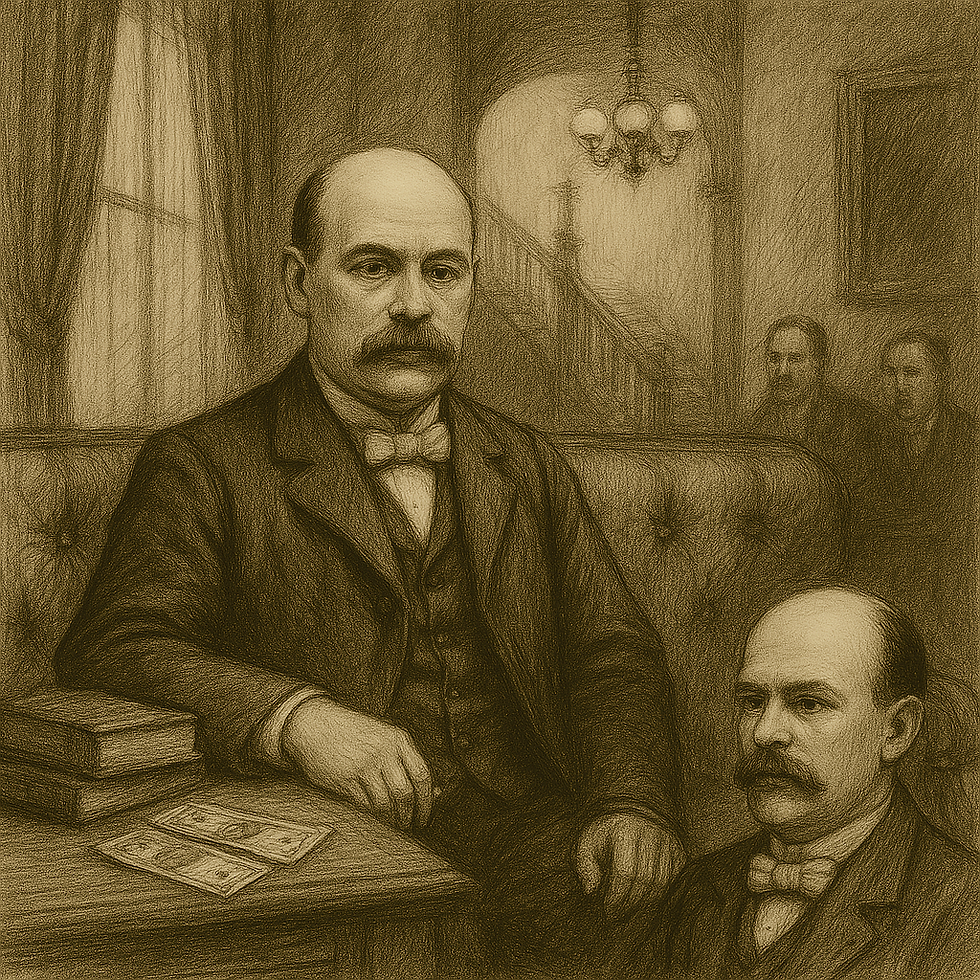
In the 1890 Colorado lieutenant governor election, Story, running as a Democrat, defeated David H. Nichols, the Republican candidate. Nichols had previously served as lieutenant governor from 1883 to 1885 and was attempting a return to office.
Later in life, Story practiced law in Salt Lake City before retiring to Los Angeles.

He later lived in Ouray, Colorado and died in Colorado Springs of heart failure in 1921 at age 78. He was buried in the Elmwood Cemetery in Brighton, Colorado.
Oddly his wife Ada, who outlived him by 17 years, died in Los Angeles and is buried in the San Gabriel Cemetery in Los Angeles County.
There is no evidence that any of the cases tainted by Story’s corruption were formally retried after his resignation in 1874 Judge Parker, his successor, was tasked with restoring the court’s integrity, his docket was immediately overwhelmed with new cases from Indian Territory.
The federal government appeared more interested in moving forward than reopening potentially compromised trials--especially given the difficulty of reassembling witnesses and evidence across such a vast and rugged jurisdiction.
Story’s resignation cleared the way for Judge Parker, who would transform the Western District into a symbol of frontier justice. But the shadow of Story’s corruption lingered--a cautionary tale of unchecked power in a lawless land.