Our Arklahoma Heritage: Charleston Schools took extraordinary and stealthy measures to desegregation in 1954


On August 23, 1954, the small town of Charleston did something extraordinary.
While the nation grappled with the implications of the U.S. Supreme Court’s landmark Brown v. Board of Education ruling on May 17, 1954, which declared segregated schools unconstitutional, Charleston Public School District quietly welcomed eleven African-American students into its classrooms alongside approximately 480 white students.

This unassuming act made Charleston the first school district in the former Confederate states to integrate all twelve grades, a feat that went largely unnoticed until weeks after the school year began.
Today, Charleston’s pioneering role in desegregation is commemorated as a National Commemorative Site by the U.S. Department of the Interior National Park Service, a testament to a community that chose unity over division.
The Brown v. Board decision sent shockwaves across the United States, particularly in the South, where state laws enforcing segregation were deeply entrenched.
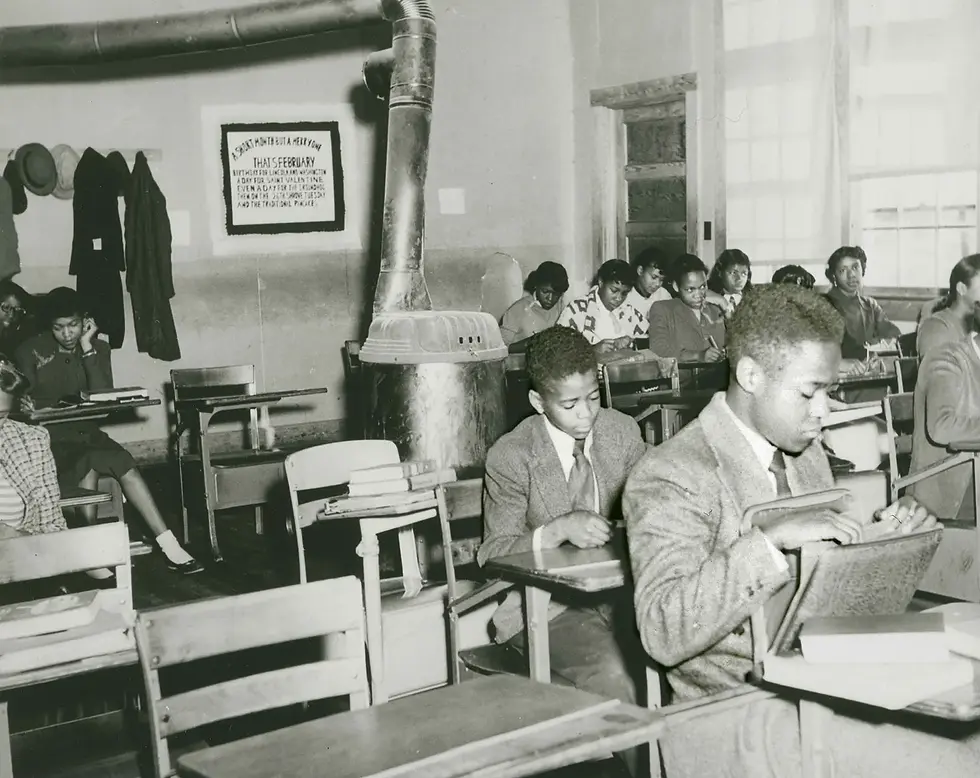
In Charleston, a rural community in Franklin County, the five-member school board--President Howard Madison Orsburn, George Ferrell Hairston, Archibald R. Schaffer, Herbert E. Shumate, and Homer Keith--met on July 27, 1954, to chart a new course. In a unanimous vote, they decided to “disband the Colored School and admit the Colored children into the grade and high school when classes open for the fall semester.”
This decision, driven by a commitment to civic obedience and the spirit of the Supreme Court’s ruling, marked a turning point for the town.

Superintendent Woodrow W. Haynes played a pivotal role in ensuring the transition was smooth. Recognizing the potential for controversy, Haynes and the school board worked diligently over the summer to keep their plans under wraps.
They persuaded local civic and business leaders, including the editors of the Charleston Express, to refrain from sharing the news with out-of-town media. This strategic silence allowed Charleston to implement integration without the immediate scrutiny that could have sparked resistance.
It wasn’t until September 13, 1954--three weeks after the school year began==that School Board President Orsburn revealed to reporters that Charleston had peacefully integrated its schools.
By then, the integration was in full effect, and the town had avoided the chaos that plagued other districts, such as Little Rock’s Central High School in 1957.
While moral conviction and adherence to the law were central to Charleston’s decision, economics also played a significant role. Prior to 1954, the district faced substantial costs--approximately $4,500 annually--to transport African-American high school students to Lincoln High School, an all-black school in Fort Smith, about 20 miles away.
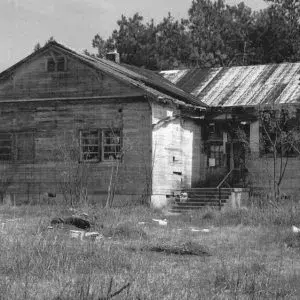
Younger black students attended the local Rosenwald School, a tax-supported institution for grades one through eight, but it was in dire need of repairs the district could not afford. By integrating its schools, Charleston eliminated the need for costly transportation and closed the Rosenwald School, redirecting resources to a unified educational system.
The integration process was not without challenges. On the morning of August 23, 1954, as students arrived for the first day of classes, Superintendent Haynes discovered a racial slur scrawled on an exterior school wall. Determined to set a positive tone, he and a janitor quickly removed it before students could see it, ensuring the day proceeded without incident.
This quick rection reflected the district’s commitment to making integration work.

Charleston’s integration was not universally accepted. Some schools refused to compete against Charleston’s integrated football team, and the band faced exclusion from certain competitions due to its African-American members.
Yet, the community pressed forward. In 1957, as the nation’s attention turned to the tumultuous desegregation of Little Rock’s Central High School, a small group of Charleston segregationists attempted to reverse the town’s progress.
They organized, selected candidates, and campaigned aggressively for two vacant school board seats in the December 6, 1958, election. Their efforts were resoundingly defeated by a 2-1 margin, affirming the community’s commitment to integration.

The school board itself saw changes during this period. In June 1958, Superintendent Haynes announced his departure for a college administrative position in northeast Arkansas. Shortly after, board members Schaffer and Orsburn resigned, and their positions were filled by Dale Bumpers, a future U.S. senator, and Gene VanMeter.
These transitions did little to disrupt the district’s trajectory toward inclusivity.
A Lasting Legacy
Charleston’s integration bore fruit in 1961 when Barbara (Williams) Dotson and Joe Ferguson became the first African-American students to graduate from Charleston High School.

Their achievement marked a milestone in the town’s journey toward equality.
In 1998, Senator Dale Bumpers, reflecting on Charleston’s historic role, authored legislation to designate Charleston High School as a National Commemorative Site.
Today, interpretive exhibits in the school’s Annex Building and a National Park Service sign on Main Street tell the story of this quiet revolution.
The Charleston School District now serves a diverse student body, a living testament to the vision of those who, in 1954, chose to lead with courage and pragmatism.
Unlike the highly publicized struggles in Little Rock, Charleston’s story is one of understated resolve--a small town that made history by doing what was right, quietly and without fanfare.


