Our Arklahoma Hereos: From WWI through Korea, Staff Sergeant Garland Darter served with military distinction


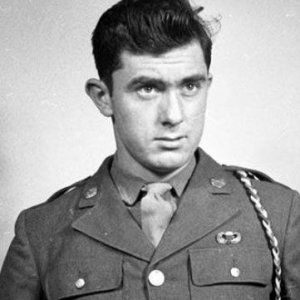
Garland Edward Darter was born on April 14, 1922, in Arkansas and died in Korea on March 11, 1951, after multiple deployments that carried him through World War II and into the fighting of the Korean War.
A career soldier who reenlisted in 1946 and served with the 32nd Infantry Regiment of the 7th Infantry Division, he fell in action during Operation Ripper and was laid to rest in Riverdale Cemetery in Columbus, Georgia, the place he had made his home after the earlier war.
The son of George Branton Darter and Minnie Bell Darter, he grew up in the rural stretches near Ozark in Franklin County and the broader Russellville area of Pope County, places where hard work on the land shaped daily life and where young men often looked to military service as a path forward.
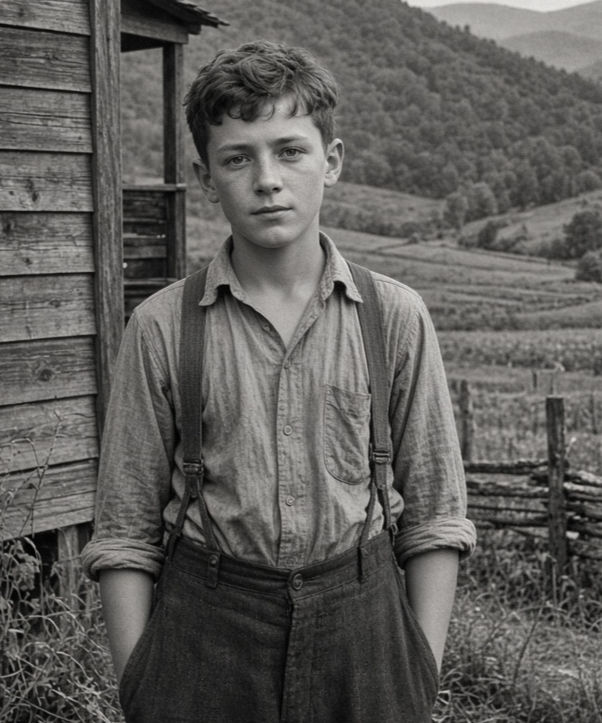
Little is recorded of his formal schooling, yet the pattern of the region and the era suggests he grew up with the practical education of farm chores, small-town schools, and the expectations of a generation that would soon face two major wars.
By the mid-1940s he had already worn the uniform, serving through the Second World War and reenlisting on April 4, 1946, at Fort Smith as a staff sergeant.
That reenlistment marked him as a career soldier rather than a one-tour volunteer, a man who chose to stay with the Army after the guns of Europe and the Pacific had fallen silent.
He settled for a time in Columbus, Georgia, a city with deep military ties because of nearby Fort Benning. There he built a life that included marriage to Gracie L. Harris Darter. Military records sometimes list a California connection for next-of-kin or enlistment purposes, yet the strongest geographic anchors remain Arkansas birth and Georgia residence.

When North Korea invaded the South in June 1950, the Regular Army needed experienced noncommissioned officers. Darter, already a staff sergeant with wartime service behind him, was assigned to L Company, 3rd Battalion, 32nd Infantry Regiment, part of the 7th Infantry Division. The division, which had been training in Japan, was rushed into the Korean fighting and would spend the war in some of the most demanding terrain and weather of the conflict.
By early March 1951 the United Nations forces under General Matthew Ridgway had stabilized the front and launched Operation Ripper, a coordinated advance intended to drive Chinese and North Korean units north of the Han River and seize high ground that controlled approaches toward the 38th parallel. The 7th Infantry Division moved as part of that broad offensive. On March 11, 1951, while the division pressed the attack, Sergeant First Class Darter was killed in action.

He was serving as a light weapons assault crewman, the kind of role that placed senior sergeants in the forward fighting positions where company and platoon leaders depended on them to keep squads moving under fire. Official accounts record the death as hostile, and the date falls squarely within the opening phase of Operation Ripper.
The Army later recognized his actions with the Silver Star, awarded by Headquarters, 7th Infantry Division, General Orders Number 108 of 1951, for conspicuous gallantry and intrepidity in action against the enemy. The precise circumstances of the engagement that earned the medal are not fully detailed in surviving public citations, yet the award itself confirms that he performed with distinction in the days or hours before he fell.

After his death the Army arranged for the return of his remains. In an era when many Korean War dead were buried in temporary cemeteries near the fighting or later consolidated at the National Memorial Cemetery of the Pacific, Darter’s body was brought home for permanent interment.
He was laid to rest in Riverdale Cemetery in Columbus, Georgia, the city where he had made his home and where his wife maintained ties. Cemetery records list him as Garland M. Darter, born April 14, 1922, died March 11, 1951, in Section 15A, plots 8 and 10.
The Georgia burial, rather than an Arkansas cemetery, reflects the life he had built after the Second World War and the wishes of his family. Local Franklin County memorials in Ozark still carry his name among the Korean War dead, preserving the connection to the Arkansas county where he was born even as his final resting place lies in Georgia soil.

His service number was RA07061266. He left behind his parents and his wife Gracie. A photograph that survives shows a young man in uniform with a steady gaze, the look of a soldier who had already seen combat and had chosen to return for more. On the Franklin County courthouse grounds he is remembered simply as one of those who gave their lives between 1950 and 1953.
The combination of Arkansas roots, Georgia residence, and a soldier’s grave in Riverdale Cemetery marks the full arc of a life that began in the Ozarks, passed through two wars, and ended on a Korean hillside during the push north in Operation Ripper.