He Hung 'em High: Judge Parker's first execution date saw five men dropped through the trapdoor


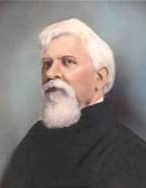
Judge Isaac C. Parker: The “Hanging Judge” and Frontier Justice in Fort Smith
Few figures in the American Old West embody “frontier justice” as vividly as Judge Isaac C. Parker, known as the “Hanging Judge” of Fort Smith.
From 1875 to 1896, Parker presided over the U.S. District Court for the Western District of Arkansas, which held jurisdiction over the lawless Indian Territory (present-day Oklahoma). His iron-fisted approach to law enforcement earned Fort Smith’s gallows the grim moniker “Hell on the Border.”
During his 21-year tenure, Parker heard over 13,000 cases, with 344 involving capital crimes. He sentenced 160 men to death, and 79 were executed by hanging at the Fort Smith gallows. The court’s jurisdiction covered a vast, volatile region where outlaws, desperados, and jurisdictional ambiguities fueled rampant crime in the post-Civil War era.
Parker’s unwavering commitment to the law, coupled with his belief in swift justice, helped tame this chaotic frontier. He famously remarked, “I never hanged a man; the law did,” reflecting his view that his role was to uphold legal order, not to act out of personal vendetta.
Parker’s court was unique for its time. Appointed by President Ulysses S. Grant in 1875 at age 36, he replaced Judge William T. Story, who faced impeachment for corruption.
Parker inherited a court plagued by inefficiency and lawlessness, with Fort Smith serving as a gateway to the Indian Territory--a haven for fugitives. His jurisdiction initially spanned over 74,000 square miles, and his court was the only federal court with authority over Indian Territory until 1896.
Parker worked closely with U.S. Marshals, including the legendary Bass Reeves, and employed hangman George Maledon, known as the “Prince of Hangmen,” who carried out most of the executions.
This article begins a series exploring men who faced justice under Parker’s gavel, starting with a pivotal moment in his early tenure.

On September 3, 1875, Judge Parker set the tone for his judicial legacy with the simultaneous execution of six men--the first under his authority.
This spectacle, witnessed by thousands, underscored his determination to restore order. The executions were carried out by George Maledon, who released the trapdoor on a gallows designed to hang multiple men at once. The condemned included five white men and one Cherokee Indian, each convicted of heinous crimes:
Smoker Mankiller, a Cherokee, was hanged for murdering his neighbor in a land dispute. Such cases reflected the complex interplay of tribal and federal law in Indian Territory.
James Moore, a notorious outlaw with a reputed seven kills, was convicted of murdering Deputy Sheriff William Spivey while resisting arrest. His case exemplified the violent resistance Parker’s court sought to quell.
Samuel Fooy, a hired gun, killed a schoolteacher for a $250 bounty, highlighting the mercenary violence plaguing the region.
Edmund Campbell was executed for the double murder of a man and his wife over a perceived insult, a crime that shocked the community.
William Whittington and Daniel Evans were condemned for robbing and murdering 19-year-old William Seabolt, a fellow traveler in the Creek Nation, for his goods and money.
This mass hanging, one of the largest in U.S. history at the time, sent a clear message: lawlessness would face severe consequences.
Over the next 21 years, Parker’s court oversaw 17 more multiple executions, with the gallows becoming a symbol of his unrelenting justice.
The September 1875 hanging drew national attention, with newspapers reporting on the grim efficiency of Parker’s court. It also cemented Fort Smith’s reputation as a place where outlaws met their end.
Parker’s methods were controversial. His court was known for its speed—trials often lasted days, and appeals were limited due to the Supreme Court’s restricted jurisdiction over Indian Territory cases until 1889.
Of the 160 death sentences, 81 were commuted, overturned, or resulted in the accused dying before execution. Parker’s reliance on juries, often composed of local citizens, and his insistence on evidence-based convictions aimed to ensure fairness, though critics argued his court favored harsh punishment.
He expressed regret over the necessity of hangings, advocating for prison reform and better conditions in Indian Territory to prevent crime.
The Fort Smith National Historic Site, which preserves the gallows and courthouse, notes that Parker’s court handled a mix of crimes, from murder and rape (the only capital offenses under federal law) to lesser offenses like liquor trafficking
. His jurisdiction shrank in 1896 when federal courts were established in Indian Territory, and Parker died later that year. His work laid the groundwork for modern legal systems in Oklahoma.
This series will continue to explore the stories of men who died under Parker's watch: outlaws, victims, and lawmen who crossed paths with the gallows, offering a window into a turbulent chapter of American history.