Cold Case Files: The 1923 vanishing (without a trace) of three -year-old Pearl Turner endures in books and conversations
- Dennis McCaslin

- Dec 1, 2025
- 5 min read


In the hills of Scott County's IN White Oak Mountain, a three-year-old girl's vanishing act a century ago continues to haunt the American imagination. Pearl Turner disappeared on October 19, 1923, from the yard of her family's remote cabin in the Tate community, a rural vviillage straddling yjr border between Scott and Logan counties.
Despite one of the largest searches in early 20th-century Arkansas history, involving up to 1,500 people and gripping national headlines, no trace of the barefoot toddler in her blue print dress was ever found.
Today, 102 years later, Pearl's case stands as one of the state's oldest unsolved child disappearances, a poignant reminder of an era when rural isolation could swallow a life whole.

The Turners were sharecroppers eking out a living in the dense, unforgiving dirtof west-central Arkansas.
Lynn Turner, often described in reports as a "mountaineer," toiled cutting firewood to supplement the family's income from tenant farming.
His wife, Lela, managed the household for their five children: daughters Rosa and Ruby, an infant son, another young child, and the spirited Pearl, born around 1920.
Their one-room cabin in Tate, a speck of a settlement two miles from White Oak Mountain's base, was a world away from modern conveniences with no telephones or even roads wide enough for cars, just endless stands of hickory and oak
.Life was simple but harsh. Wild huckleberries dotted the landscape, a treat for children like Pearl. Yet the mountains harbored dangers: steep washes, thick brambles, and packs of wolves that prowled the nights.
In 1923, such isolation amplified every mishap into potential tragedy.

It was a crisp Friday morning when routine turned to nightmare. Lynn was chopping wood in a clearing with Rosa and Ruby, the older girls helping gather kindling. Pearl, curious and toddling, wandered from the cabin to join them.
Fearing the axe, Lynn sent her back with her sisters, who distracted her with a handful of freshly picked huckleberries.
They left her content on a tree stump in the front yard, munching away, before hurrying back to their father.
Around noon, Lela rang the dinner bell, the daily call to the midday meal. The children trickled in, but Pearl did not
A frantic sweep of the yard and nearby brush turned up nothing.
Then, small barefoot footprints appeared in the soft dirt road, leading toward the mountain's shadowy base. There, the trail ended abruptly at the woods' edge, marked only by a handkerchief Rosa had sewn that morning from a flour sack for her little sister.

"It was like the earth just opened up and took her," a later retelling in a 1979 local history piece would somberly note.
Word spread like wildfire through Tate. Lynn and Lela, leaving their infant with Lela's sister Nola, scoured the undergrowth themselves. By dusk, landlord L.P. Wilson had summoned a posse of over 25 men, led by Scott County Sheriff Ben Allen.
As night fell, Lela's cries echoed: "She's out there in the dark and cold!"
Dawn brought reinforcements from Waldron and Booneville. By midday October 20, lines of men advanced 20 paces apart, combing the slopes with lanterns and calls. Volunteers poured in by horseback, wagon, buggy, even on foo, —swelling to hundreds.
The New York Times reported on October 24 that 800 men were scouring the Ozarks around Booneville and Sugar Grove, with Sheriff Allen pleading for supplies from Fort Smith police
.The effort ballooned into a spectacle. Bloodhounds from Booneville arrived but caught no scent. Trucks from Fort Smith's OK Transfer and Storage Company ferried Boy Scouts and Arkansas Boy Rangers with food and gear.

A wagon from the Mansfield Ku Klux Klan delivered groceries, an uneasy alliance in the era's tense social climate. Campfires dotted the ridges like "a giant Christmas tree," drawing wolves that howled at the edges of the light.
Churches in Waldron and Booneville suspended services to free up more hands. The search dragged into weeks, battling autumn chill and rugged terrain, but yielded only echoes.

Nationwide media amplified the drama. Front-page stories in the Southwest American (Fort Smith) on October 28 detailed "scores joining the hunt." Coverage rippled to St. Louis, Springfield, and beyond, turning Pearl's plight into a symbol of rural vulnerability.
As days turned to weeks, desperation birthed leads, mostly cruel mirages. A fortune teller from Hot Springs envisioned Pearl captive in a Tate home; posses ransacked every cabin on November 8, finding nothing.
Clairvoyants in Fort Smith assured Lela her daughter was safe. A hermit-poet from Magazine Mountain claimed to have seen Pearl sleeping in a stranger's house two days prior, leading to an innocent family's brief arrest.

Sightings multiplied: a girl with a traveling couple in a covered wagon from Malvern; an abandoned child claimed by a Hodgens, Oklahoma, pair; a man and toddler at Fort Smith's Atalee Hotel, fleeing to Oklahoma.
The most tantalizing came November 8 from Picher, Oklahoma: a boarding house child calling herself "Elizabeth" but whispering she "used to be Pearl Turner," lured away for candy, a dress, and stockings.
The drifter father was arrested, Lela and the hermit rushed there. The hermit, who had taught Pearl songs, swore it was her when the girl sang a familiar chorus.
But Lela, spotting no telltale scar on the child's arm, rejected the match. The girl was not Pearl and the drifter was released.

By late November, headlines faded. A final Liberal News plea on November 23 called for renewed hill hunts, but momentum waned. Officially, the case closed by year's end, though suspicions lingered on the parents (searchers once demanded confessions), a local preacher who lingered oddly on the porch, and a mysterious morning visitor who vanished into the mountain.
\What befell Pearl? Early fears pointed to the wild: lost and injured, perhaps fallen into a wash or mauled by wolves. The abrupt end to her footprints fueled abduction whispers by travelers, drifters, or even locals.
Kidnapping became the prevailing theory as searches failed, echoed in modern retellings.
No evidence surfaced for any scenario.

The Turners never stopped. Lela roamed the winter mountains, voice hoarse from calling "Pearlie?" Hunters in spring found her still searching alone. The family relocated to a Booneville farm, then Oklahoma and finally California, yet the void followed. L
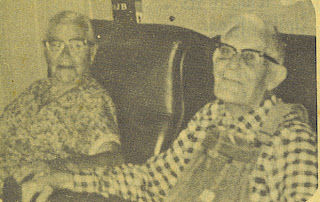
Lynn died in 1970, Lela in 1973, both clutching unanswered questions. A 1969 photo of the couple, weathered but arm-in-arm, captures their quiet resolve.
Pearl's story refuses oblivion. Historian Walter H. Watts revived it in a 1979 Southwest Times Record feature, drawing on oral histories from Waldron elders. Bill Yates' 2020 book, Pearl: Lost Girl of White Oak Mountain, weaves the "incredible events" into a mountain legend, praising the era's communal spirit amid the sorrow.
YouTube videos and forums keep the flame: one 2025 upload ponders "Pearl Turner Missing Over 100 Years," while readers of Yates' work debate whether Peari succumbed to the woods or wanderers? in reviews lamenting the "tangled web" of false hopes.
In Tate's quiet descendants, the tale lives in folklore, a cautionary whisper in the wind.
No new leads have emerged in decades, and with the Turners long gone, closure seems as elusive as those fading footprints. Yet Pearl's absence endures as a cold case etched in Arkansas soil, urging us to remember the lost and the lengths we go for them.


