Cold Case Files: A 24-year-old murder mystery from the trails of the National Historic Site remains cold
- Dennis McCaslin

- 9 minutes ago
- 3 min read


In 2002 a park ranger walking the old fort at the edge of the Arkansas River found a man on his back in the grass of Fort Smith National Historic Site. His name was Edward Choi.
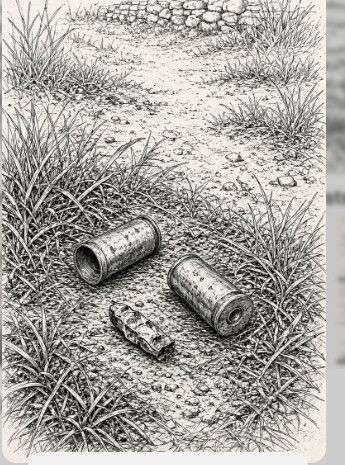
His pants and boxers had been pulled down to his thighs. He was wearing a black Nirvana sweatshirt with the yellow smiley face. Beside him lay two brass shell casings and a fragment of a bullet.
Fort Smith police came. They called it a homicide. Then the city, which is good at remembering hangings and bad at remembering certain kinds of dead men, mostly stopped talking about him.

That is nearly the whole of what the public was ever allowed to know.
Fifteen years later, a reporter working a list of twelve unsolved Fort Smith killings since 1985 used Choi as an example and added nothing. No age. No date inside that year. No last place he was seen alive. No job. No family quote. No caliber. No named detective still carrying the file. The sentence ended where it began: still unsolved.
The ground where he was found is not anonymous. It is the parade ground of the second fort, the river loop, the reconstructed gallows, the stone commissary, the barracks that became Judge Parker’s courthouse. Tourists photograph the ropes. School groups learn about Belle Point and the Trail of Tears.

After hours, the lawns and the trail along the water belong to whoever is willing to walk them. A body there is either a killing done in the open or a short carry from the street into a place a ranger would eventually pass. Two spent casings argue the gun was emptied at that spot, or close enough that the brass did not have to be planted. Brass on the ground usually means a semi-automatic. Two casings do not tell you how many times he was hit. They only tell you the shooter did not pick up after himself.
The clothing is the part that will not sit still. Underwear at mid-thigh is how detectives write a scene they do not want to name in the paper. It can be an assault. It can be a search of pockets. It can be a pose meant to make the dead look like something other than a shooting.
The 2017 story never said which theory the department preferred. It never said whether a sexual assault kit was run, whether DNA went into a database, whether his wallet was on him or whether someone who knew the face came forward the same day. He had a name by the time the report was written.
That is all.
The sweatshirt is the only personal detail that survived. In 2002 the Nirvana face was still ordinary. It does not prove he was young. It only suggests he was not dressed for an office on Garrison. Witnesses, if any existed, would have been asked about a man in that shirt. If anyone answered, the answer never left the file.
Federal land complicates the first hour. A ranger found him, so the Park Service owned the first radio call. City detectives owned the murder. Nothing public says the FBI or a park investigator stayed on the case. Nothing public says they did not.
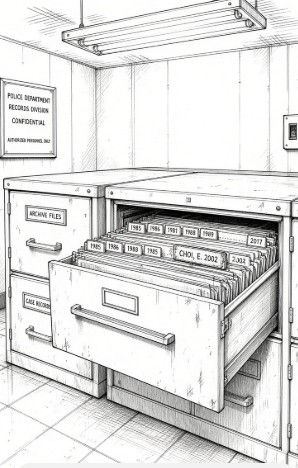
Sgt. Daniel Grubbs, speaking for the department in 2017, said most Fort Smith homicide victims know the person who kills them. If that pattern holds, Choi did not die at the hands of a stranger who wandered onto the fort. If it does not hold, the river and the dark lawns are still a good place to leave a man you do not want found until morning.
Do not confuse him with the unidentified woman found in brush near the river that same year. Do not confuse him with other Chois the search engines prefer. This is one identified man, shot, arranged, left on the city’s most photographed historic ground, and then allowed to become a clause in a roundup story.
The case, as the public may have it, ends there. Edward Choi was found in 2002 on the National Historic Site, on his back, lower clothes displaced, Nirvana shirt on his chest, brass and a bullet fragment in the dirt.
The police called it murder. They were still calling it unsolved a decade and a half later.
Anyone who saw a man in that shirt near the fort, or heard shots on the river loop, or knows why a body would be left that way, can still call Fort Smith Police Criminal Investigations.
The file is waiting for a fact it has never been given in public: a day, an age, a reason, a name other than his.


